
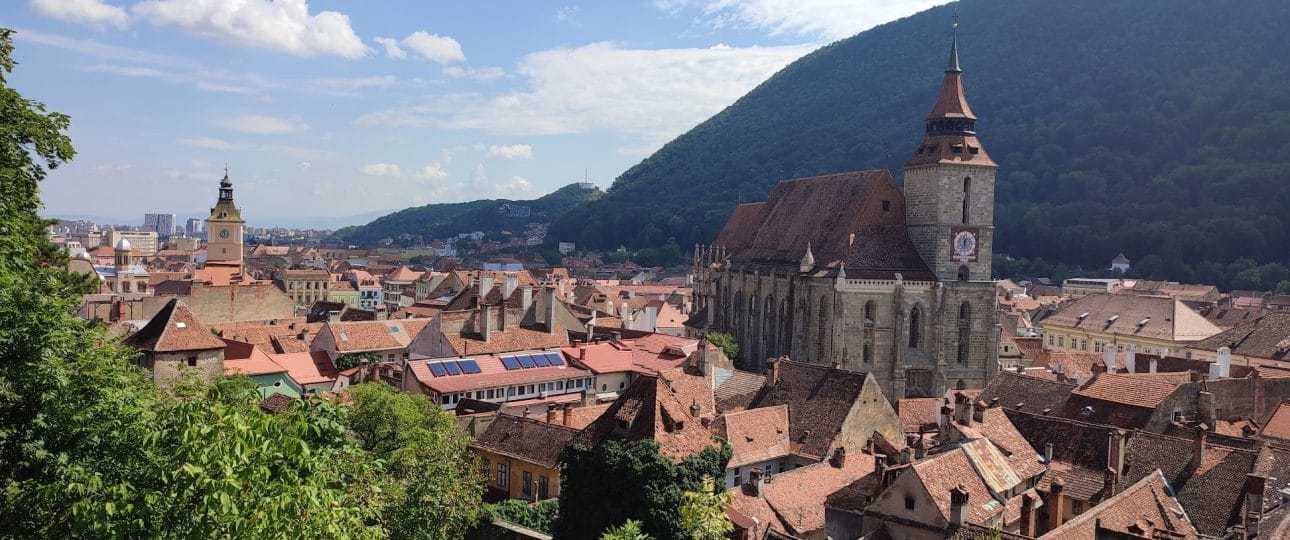
Planning your trip to Transylvania and searching for the best Brasov activities? You’ve probably already seen photos of Bran Castle, the Black Church or the colorful streets of the old town. But once you arrive in Brașov, you’ll quickly realize there’s much more to discover beyond the famous tourist attractions.
From hiking trails in the Carpathian Mountains and wildlife watching experiences in the wild, to medieval streets, hidden viewpoints and authentic Saxon villages, Brașov area is one of the best destinations in Romania if you want a mix of nature, history and outdoor adventure.
As locals who spend most of our time exploring these mountains and guiding travelers around Transylvania, we created this guide to help you experience the city beyond the typical tourist route. Whether you want scenic hikes, family-friendly attractions, cycling routes, castles, local food or unforgettable day trips, these Brasov activities will help you plan a trip you’ll actually remember.
Ready to explore Brașov like a local? Start with the experiences below.

Explore Brașov & Transylvania


The Secrets of Old Brașov
Brașov is one of those cities where history feels alive on every street corner. As you walk through the old town, past medieval walls, hidden courtyards and centuries-old buildings, you’re stepping through layers of Transylvanian history shaped over hundreds of years.
Why does it feel so unique? By the 14th century, Brașov had already become one of Transylvania’s most important trading cities, protected by massive defensive walls. Inside the citadel lived the Saxon community, while Romanian and Hungarian neighborhoods developed just outside the gates, shaping the multicultural atmosphere the city still has today.
Hidden Stories Behind the Architecture
- The Șchei District: While the medieval citadel of Brașov was primarily inhabited by the Saxon community, Romanians lived in the nearby Șchei district, just outside the city walls. Today, the area is known for its traditional houses, narrow streets and important Orthodox heritage sites.
- The Great Fire of 1689: A devastating fire in 1689 destroyed a large part of medieval Brașov. Many of the colorful Baroque-style buildings seen in the old town today were rebuilt after this event.
- The Medieval Defensive Walls: Parts of Brașov’s old defensive walls, bastions and towers can still be seen around the historic center, offering a glimpse into the city’s medieval past and former fortifications.
History in Brașov isn’t hidden in museums — it’s part of the city itself. From the Black Church and Rope Street to quiet hidden courtyards and old defensive towers, every corner tells a story.
These are just a few of the Brasov activities that help you experience the city beyond the typical tourist route. Continue below to discover more places worth exploring around Brașov and Transylvania.
Top Brasov Activities You Can’t Miss
Explore Brașov’s Historical Landmarks
Brașov is one of the best destinations in Romania if you enjoy history, medieval architecture and walkable old towns. These Brasov activities will help you discover the city beyond the main tourist attractions, from hidden alleyways to impressive Gothic landmarks.
Use the walking itinerary below to explore the historical center at your own pace and uncover some of the most fascinating places in Brașov.
Infographic: Self-Guided Walking Route Through Brașov

The Black Church
The Black Church is the most iconic landmark in Brașov and one of the most impressive Gothic churches in Eastern Europe. Located right next to Piața Sfatului, the massive church dominates the skyline of the old town and instantly catches your attention as you walk through the historical center.
Built between the 14th and 15th centuries, the church became a symbol of medieval Brașov and of the Saxon community that shaped much of the city’s history. Its name comes from the great fire of 1689, which darkened the walls and permanently changed the appearance of the building.
Inside, you’ll discover an impressive Gothic interior, one of Europe’s richest collections of Oriental carpets and the famous Buchholz organ, still used today during concerts and special events. Even if you are not passionate about architecture or religion, the atmosphere inside the church is worth experiencing.
Among all Brasov activities in the old town, visiting the Black Church is easily one of the experiences you shouldn’t miss.
Practical Details: Hours and Entrance Fees
Based on the current schedule, here are the details for planning your visit:
Visiting Hours:
- Summer Season (April 1st – October 15th):
- Sunday & Monday: 12:00 p.m. – 7:00 p.m.
- Tuesday – Saturday: 10:00 a.m. – 7:00 p.m.
- Winter Season (October 16th – March 31st):
Sunday & Monday: 12:00 p.m. – 6:00 p.m.
Tuesday – Saturday: 10:00 a.m. – 6:00 p.m.
Opening hours and ticket prices may occasionally change during religious events or concerts.
Entrance Fees:
Adults: 30 RON (6 EURO)
Students and seniors: 25 RON (5 EURO) (student card/senior ID required)
Free Entry: Children up to age seven, disabled persons.
Note:
- The Black Church is closed on the 1st of January and 25th of December.
Local’s Tip: If you visit Brașov between summer and early autumn, try attending one of the organ concerts hosted inside the church. Listening to the historic Buchholz organ in such an atmospheric setting is one of the most memorable experiences in Brașov.

Visit Saint Bartholomew Church
Located outside Brașov’s Old Town, Saint Bartholomew Church is the oldest building in Brașov, dates back to the early 13th century. Built in the Cistercian monastic style, it offers a completely different atmosphere compared to the crowded attractions in the historic center.
Over the centuries, the church was damaged several times during invasions and fires, and only parts of the original structure survived. Today, you can still admire the old choir area and the eastern chapels, which preserve much of the church’s medieval character and historical charm.
Today, only the choir and two chapels on the eastern side remain from the original structure.
Visiting Saint Bartholomew Church gives you the chance to discover a quieter and more authentic side of Brașov, away from the busy areas. Even if the interior is not always open to visitors, the surrounding area and the exterior architecture are still worth exploring if you enjoy history, photography and hidden historical landmarks. You can easily find the church here.

Locals’ tip: For the best view of Saint Bartholomew Church, hike up the nearby hill. The panoramic view of the church and the surrounding area is well worth the effort!
Visit Saint Nicholas Orthodox Church in Șchei
If you want to discover the Romanian side of Brașov’s history, Saint Nicholas Church is one of the most important places you can visit. Located outside the old fortified walls, this church has been the spiritual and cultural heart of the Romanian community for centuries.
Dating back to the 15th century, the church played a major role in preserving the Romanian language, Orthodox traditions and local identity during a time when Romanians were not allowed to live inside Brașov’s fortified citadel.
Inside, you’ll discover impressive frescoes and religious paintings illustrating important moments from Romanian history and Orthodox traditions. On the northern wall, you’ll find a depiction of Prince Michael the Brave’s entrance into Brașov, a moment marking an important chapter in Romanian history. On the southern wall, there is a scene illustrating the coronation of King Ferdinand I of Greater Romania in Alba Iulia, an event that symbolized the unification of the Romanian people in 1918.
A visit to Saint Nicholas Church offers a unique opportunity to experience the traditions of the Romanian Orthodox Church and explore the vibrant history of Brașov. The church is located in the Șchei neighborhood, one of the oldest areas in the city, providing visitors with a chance to enjoy the local atmosphere and architecture.
Visit the First Romanian School
Right next to Saint Nicholas Church, in the heart of the old Șchei district, you’ll find the First Romanian School — one of the most important historical landmarks in Brașov if you want to better understand Romanian culture and identity.
The building dates back to the 15th century and is the place where the first Romanian-language lessons were held. Today, the former school functions as a museum where you can explore old classrooms, early Romanian printed books, handwritten manuscripts and one of the first printing presses used in the region.
Visiting the museum gives you a different perspective on Brașov beyond the usual tourist attractions. Together with Saint Nicholas Church, it offers a glimpse into the history of the Romanian community that lived outside the citadel walls for centuries.
If you enjoy history, local culture and hidden places with authentic atmosphere, this is one of those Brasov activities that’s absolutely worth adding to your itinerary.

Museum of the First Romanian School
The museum at the First Romanian School was officially organized in 1964, although collections of archaic and original items were started in 1933. It houses a remarkable collection of early Slavic and Romanian books, including the first Romanian Bible and what can be considered the first school magazine in Romania. The library holds over six thousand books, many of which were used in the school during its operation.
Unique Artifacts and the First Romanian Printing Press
A highlight of the museum is the first Romanian printing press, which produced only 39 books due to the labor-intensive nature of the process. Despite the small number of books printed, the press is responsible for several significant milestones in Romanian history:
The first Romanian letter in Latin was printed here.
The first Romanian schoolbook was created using this press.
The first Romanian Bible, printed on goatskin, with a cover weighing a hefty seven kilograms.
A visit to the First Romanian School offers a fascinating journey into the history of Romania’s education system and the development of the Romanian language.
Visit Saint Catherine’s Gate
Saint Catherine’s Gate is the only remaining entrance gate to the old part of Brașov. Built in 1559, it was the main entrance from the Șchei neighborhood until the first half of the 19th century.
The gate is historically significant not only as a key point of entry but also for the four turrets around the main tower. These turrets are a reminder that the community had the right to apply capital punishment—known as Jus gladii—a right that must have been quite powerful back in the day!
Above the gate, you’ll notice Brașov’s coat of arms, featuring a crown placed on top of tree roots, symbolizing the city’s deep-rooted history and traditions
Visit the Citadel
The Brașov Citadel, originally built as a watchtower, was constructed in 1524. A bastion was erected around it, but it was destroyed by Petru Rareș’ army in 1529. The fortifications were rebuilt in the mid-16th century and expanded at the beginning of the 17th century with the addition of four new bastions. After 1688, the Citadel was occupied by the Austrian garrison.
In 1932, it was offered to King Carol II of Romania by the Brașov City Hall and turned into a military prison. It was restored in 1975 and opened as a tourist attraction in 1981.
Current Status of the Citadel
Currently, the Brașov Citadel is closed to visitors due to restoration work. As of 2025, entry to the Citadel is not allowed for the general public. However, this situation has changed over time, so it is recommended to check with local authorities or tourism offices for the latest updates regarding access.
While the Citadel may not be open, visitors can still hike up the hill and enjoy a spectacular panoramic view of Brașov from the top!
Brasov Activities: Visit the Weaver’s Bastion
The Weaver’s Bastion is one of Brașov’s hidden gems, often underrated by visitors. Located within the city’s medieval walls, it was built in two stages, between 1421-1436 and 1570-1573, and was cared for by the Weaver’s Guild. It is the best-preserved bastion in Brașov and the only one still open to tourists.
Since 1910, the bastion has been transformed into a museum. In 2001, a permanent exhibition was opened, and the main attractions include a 1896 scale model of how Brașov looked in the 1600s. Another highlight is the main building, resembling an amphitheater, known for its exceptional acoustics. This space has hosted several musical concerts over the years.
Practical Information:
Entrance Fee: 10 LEI per person
Opening Hours: Every day from 9 AM to 5:00 PM, except for Mondays, when it’s closed.
Brașov is an ancient medieval city, rich in history and exploring its many secrets can take a lot of time. If you have enough time, we recommend visiting the following historical landmarks:
- House of Mureșenilor Museum,
- Brașov History Museum,
- Holy Trinity Church,
- Church of the Assumption of Virgin Mary,
- Museum of Urban Civilization,
- St. John Franciscan church,
- Church of St. Peter and Paul apostles,
- The White and the Black towers(closed to the public, but offering fantastic views of Brașov)
- Beth Israel Synagogue,
- Art Museum and Ethnographic Museum (both hosting impressive collections).
Entrance fees for these attractions are affordable, making Brașov an excellent destination for history lovers.
Brasov Activities: Visit the Famous Rope Street
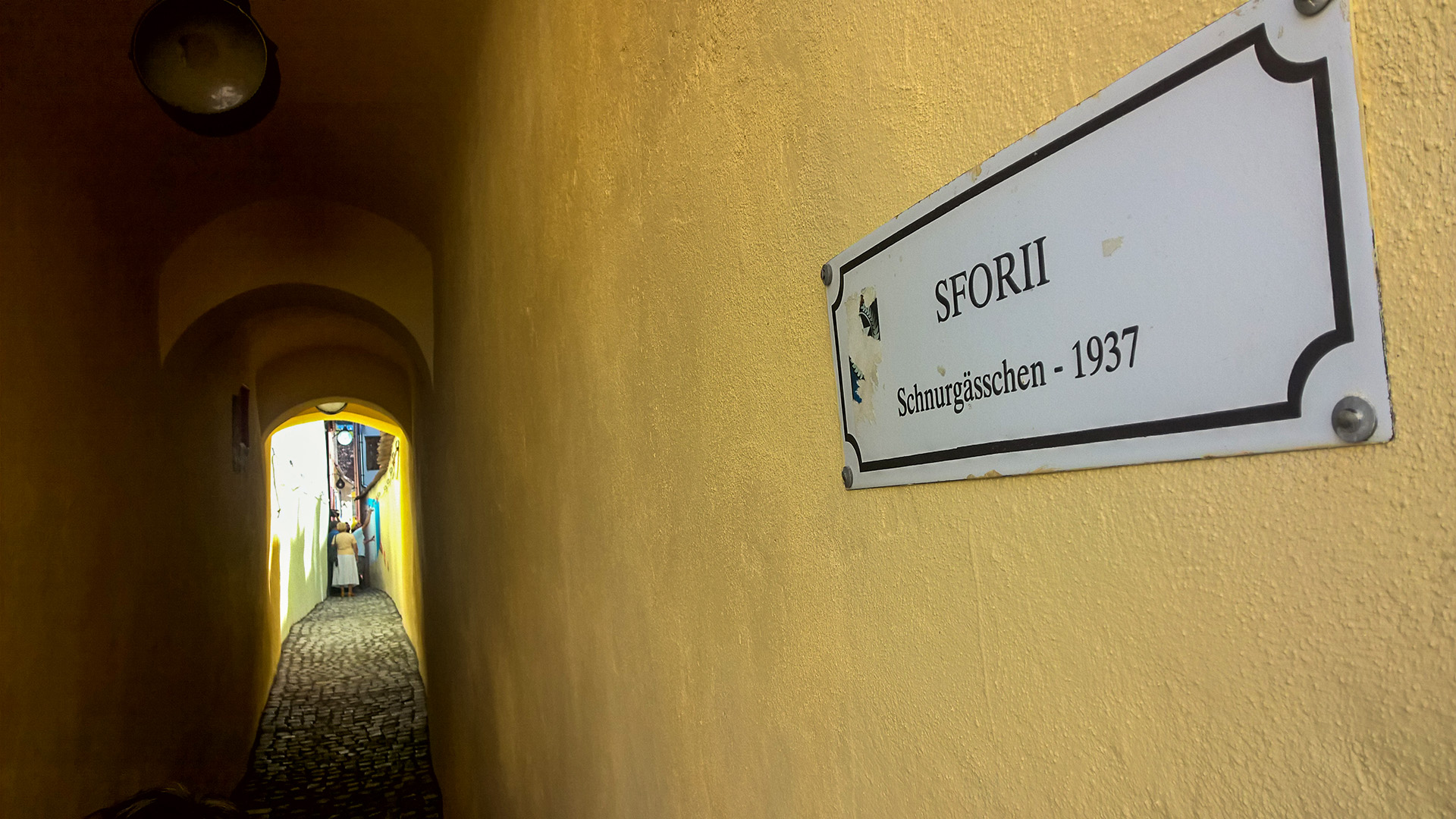
The Rope Street, one of Brașov’s most iconic attractions, was originally built as an access passage for firefighters, connecting Poarta Șchei and Cerbului Street. First mentioned in the 17th century, it is now known as one of the narrowest streets in Europe, measuring only 80 meters in length and ranging from 1.11 to 1.35 meters in width.
Rope Street is currently undergoing restoration works, so access may occasionally be restricted during your visit.
Brasov Activities: Go to the Top of Mount Tâmpa
One of the first things any tourist notices upon arriving in Brașov is the iconic Hollywood-style letters at the top of Mount Tâmpa. These letters weren’t always there and are a relatively recent addition.
Getting to the top of Tâmpa is easy and there are several hiking trails to choose from, depending on your fitness level. If you want a quicker option, you can take the cable car. No judgment here—not everyone has a mountain in their backyard!
Enjoy the View from Mount Tâmpa
Once at the top, head behind the BRAȘOV letters for a breathtaking view of the city and the surrounding area. But don’t stop there! This is not the highest point of Tâmpa. You’ll need to follow a 2-3 minute trail to reach the true summit, where there is no fence between you and the stunning landscape.

And now, for a perfect ending to your hike, stop by the newly opened Panoramic Restaurant. Located at the top of Tâmpa, the restaurant offers an exceptional dining experience with amazing views over Brașov and the surrounding mountains. Whether you’re looking for a meal or just a refreshing drink, it’s the perfect spot to relax after your hike.
Our suggestion? Make it an evening hike to catch one of the most beautiful sunsets in Romania.
Don’t worry about bears or the darkness. The trails are often busy with trail runners and hikers, so you won’t be alone. Just remember to take a headlamp or make sure your phone battery is charged if you’re hiking in the evening.
Brasov Activities: Wildlife Watching Tour in the Wild
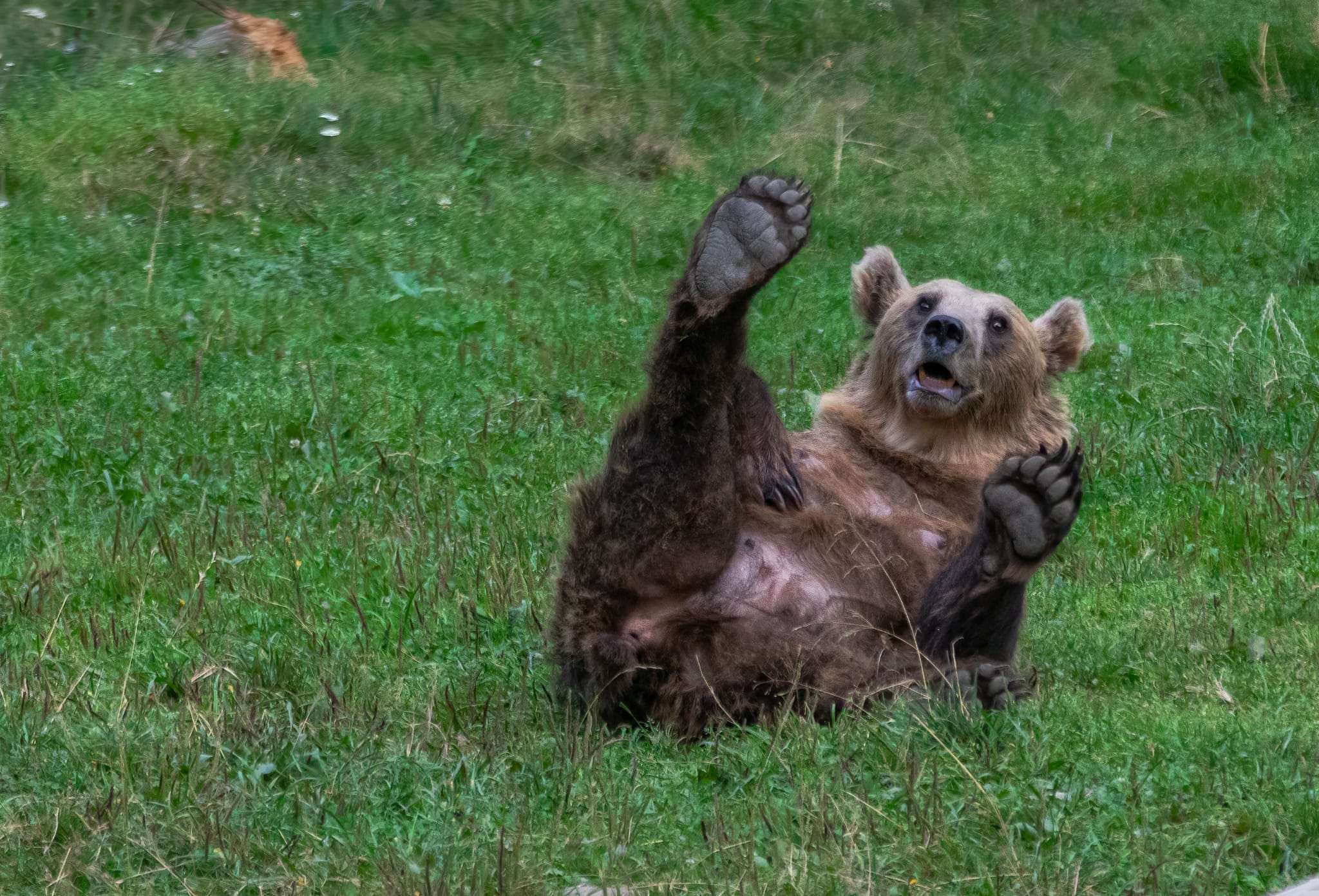
One of the most exciting experiences in Brașov is taking part in a bear watching tour in the wild. These tours typically start in the afternoon and take place in the forests near Brașov. To join a tour, simply book your tour here.
What to Expect on a Bear Watching Tour
Typically, you will be picked up from Brașov by your guide, who will take you to the designated bear hide. Alternatively, if you prefer, you can drive your own car to the meeting point, where you will meet the forest ranger to begin the activity.
Ir’s important to stay quiet and avoid using camera flash or focus assist lamps. Bears are cautious creatures and will run away at the slightest disturbance. Keep these rules in mind to ensure a successful and enjoyable experience.
For Photography Enthusiasts: Exclusive Bear Hides
If you’re an avid wildlife photographer or want a more exclusive viewing experience, we highly recommend booking a private tour at one of our specialized bear hides. These private hides are designed for those who want a quiet and undisturbed experience, with no other visitors around to ensure the best possible wildlife observation conditions.
For more information or to book your private bear watching tour, simply click here.
Explore the Land of Volcanoes
For a more immersive experience, consider joining a tour in the Land of Volcanoes, near Lake St. Anna.
This area offers a specialized bear hide that is perfect for wildlife photographers and nature enthusiasts. Located at ground level, this hide provides an excellent view of the bears, sometimes as close as 10-15 meters. With one-way mirrors between you and the bears, you can enjoy the experience without disturbing them.
While you’re there, make sure to explore Lake St. Anna, the only volcanic crater lake in Eastern Europe, as well as the Mohos Peat Bog and the Stinky Cave, known for its high gas emissions.
Go Hiking in the Nearby Mountains
If you love outdoor adventures, hiking in the mountains around Brașov is a must. The most accessible massifs are Postăvaru, Piatra Mare (The Big Rock), and Piatra Craiului.
Postăvaru is easy to reach from Brașov. You can take one of the many marked trails starting in the city, or save some time by taking bus 20 from Livada Poștei to Poiana Brașov, which is just a few meters from the mountain. The easiest route is Drumul Roșu, though avoid it in winter since it follows the main ski slope. Without snow, you can reach the peak in 2–3 hours at a relaxed pace. Don’t miss Postăvaru Chalet, one of Romania’s most picturesque mountain huts, where you can enjoy the cozy atmosphere, hearty food and unfiltered beer.

Piatra Mare is another accessible mountain. You can reach its base by bus 17B from Brașov’s main train station or on foot in about 1.5–2 hours. Several marked trails first take you to the Piatra Mare Hut and from there it’s about an hour to the summit. Be sure to try the biscuit salami at the hut—it’s a local favorite!

Piatra Craiului, near Zărnești, is the third accessible mountain, a bit more challenging but incredibly rewarding. You can reach Zărnești by car or by train. The easiest and cheapest way is by train: RegioCălători operates trains from Brașov to Zărnești. You can buy tickets online (note: their website has no English version yet) or directly at a separate counter at Brașov train station. A one-way adult ticket costs about 7 LEI (around 1.5 Euros).
Once in Zărnești, head towards the mountains and leave the paved road for a gravel one that leads into a valley. From this point, you’re in Piatra Craiului National Park. Remember to pay the entrance fee (10 LEI/person) at the Tourist Information Center before you start hiking. There are several marked trails, ranging from short walks to full-day hikes. Bring plenty of water, snacks and sturdy shoes. Keep your eyes open—you might spot chamois, deer and a variety of birds and other wildlife along the way.

Once you arrive in Piatra Craiului, feel free to explore the area on the numerous marked mountain trails—either on your own or with a guide. If you decide to tackle the main ridge, we strongly recommend going with a licensed mountain guide.
For an easier option, you can follow the main gravel road until you reach the Zărnești Gorges, a stunning 2-kilometer-long canyon with towering cliffs. Another choice is to head to Curmătura Chalet, where you can relax and enjoy the beautiful mountain scenery while savoring a rustic ciorbă (Romanian-style soup) or a warm mug of tea with rum. You can even spend the night here in basic rooms, preparing for a more challenging hike the next day to La Om Peak along the Northern Ridge.
Locals’ tip: To help you navigate the marked trails, try the free Romanian app Munții Noștri. Don’t worry about the name—the interface is in English, so you’ll have no problem finding your way.
If you’ve explored the more accessible mountains like Postăvaru, Piatra Mare and Piatra Craiului and still have some time, the Carpathians have even bigger adventures waiting for you. Not far from Brașov, you can discover the strange rock formations of Ciucaș Mountains, the enchanting highlands of Bucegi Mountains or the breathtaking alpine ridges of Făgăraș Mountains. Here’s what you need to know to plan your hikes in these iconic massifs:
Ciucaș Mountains: The Hidden Gem
Situated about 40 kilometers (a 1-hour drive) from Brașov, the Ciucaș Mountains are the least known, mainly because they have poor public access.
Same as the other mountains, you will find several accessible marked trails that will take you to the peak, situated at 1,954 meters. However, keep in mind that Ciucaș is famous for its unpredictable weather—strong winds and winter blizzards can quickly turn an easy hike into a real challenge.
If you plan to hike on your own, check the forecast carefully and let someone know your route. Alternatively, you can hire a licensed mountain guide to ensure a safe and enjoyable trek.

Locals’ tip: Visit Ciucaș in June, when the rhododendrons are in full bloom and the alpine meadows turn a stunning shade of pink. In the fall, the mountains light up in brilliant oranges and yellows, as if painted by Mother Nature herself. On some days, you might even be treated to the magical sight of a sea of clouds stretching across the valleys.
Bucegi Mountains: The Land of Legends and Natural Wonders
Located on the way to Bucharest, the Bucegi Mountains are among the most accessible high peaks near Brașov. If you travel to Transylvania by train, you might even see them from your window.
Bucegi is part of one of Romania’s 16 natural parks and can be easily reached by car, making it popular with tourists. The eastern slopes drop steeply toward Prahova Valley, while the plateau on top is relatively flat, shaped by wind and rain into unique rock formations like the Sphinx and Babele. The Heroes’ Cross on Caraiman, standing at 2,291 meters, is visible for tens of kilometers. The cross was erected between 1924-1928 to honour the memory of the soldiers from WWI.

Făgăraș Mountains: The Alps of Transylvania
Făgăraș is Romania’s longest and highest ridge and is often dubbed ‘Transylvanian Alps’. The main ridge extends east to west for over 70 km. The eastern end lies just south of Braşov, separated from the Piatra Craiului by the Bârsa Valley. The ridge ends just west of Sibiu which flows along the northern side of the Făgăraş, bends south. Geographically, the Făgăraş is the natural border between Transylvania to the north and Muntenia to the south. It also marked the border of the Habsburg Empire.

Eight of Romania’s 14 peaks over 2500m lie in the Făgăraş, including the two highest peaks in the country: Moldoveanu (2544m) in the eastern part, and the rockier Negoiu (2535m) in the western half. As many as 42 peaks are over 2400m. The first and last stages of the 90 km-long ridge route proposed in this chapter (Route 22) involve a long, slow ascent to the main ridge through forest and over long, rust-coloured grassy slopes. The middle three stages are more eventful and sometimes require some bravery and stamina, especially when traversing Romania’s most difficult scrambling section, Custura Sărății, which lies just west of Negoiu Peak (but can be bypassed). The summit path is well marked and, with the exception of some scrambling sections, the path is always clearly visible. There is no shortage of water in the Fagaras, which mostly concise igneous rocks; there are plenty of springs on the trail or a short distance fare as well as a good many glacial lakes and tarns, which make for great spots. In fact you can camp anywhere you like the Fágáraş is not a national park (vet) and therefore bivouacking is not restricted to designated areas. The ride dotted with refugees, cabanas can be found in the valleys to the north and retire descending to an altitude of 1500m or lower. The climate in the Fagaras is harsher than in most other mountainous areas in Romania; it receives the highest amount of rainfall and it is often the first to see snow.
Those who do not want to make a full traverse of the main spine, which can be tackled in five or six days if not descending to cabanas, will want to opt for one of the many access routes from the north. The northern side is much steeper than the southern side and hence the approach walks, through glacial valleys, are shorter. Access points from the north (from west to east) are Avrig, Porumbacu de Jos, Ucea de Jos, Voila and Făgăraş, which are all on the railway line from Sibiu to Braşov. In each case, though, you will have to cover quite some distance (20-30 km) before you are really at the foot of the mountains, whereas you will be right at the start if you begin at the eastern or western end in Plaiul Foii or Turnu Roşu respectively. The railway halts in the west are considerably closer to the mountains than the ones in the east. Another option would be to hitchhike (or drive) up the famous Transfăgărăşan Road from Cârța and start your hike at Bâlea Lake. There is one company that offers bus transfers to Bâlea Lake, see www.baleabus.ro (reservations only). Note that the Transfăgărăşan is open from late June until September only, with precise dates dependent on snow cover. Check www.transfagarasan.net for up-to-date info. The southern spurs, with gentler and longer slopes, are hardly frequented by tourists, except perhaps for the Rea Valley, which allows tourists to drive up to just a few hours away from the Moldoveanu Peak.
Try a cycling tour in Brașov or in the surroundings
One of the most exciting activities in this list of things to do in Brașov is cycling. Being surrounded by hills and mountains, Brașov is perfect for those seeking a cycling adventure. There are numerous trails and forest roads accessible for everyone and some a bit more difficult, for those looking for adrenaline.
17. One of the most popular biking routes is the forest road that takes cyclists from the area called Pietrele lui Solomon up to Poiana Brasov resort. It is a relaxing gravel road that goes through the forests for a few kilometers. Also, in this area, there are numerous marked hiking trails that can be used for cycling as well. Just make sure you don’t go too fast and respect other people.

18. Another popular trail among locals is at the foothills of mount Tâmpa. It goes almost entirely around the base and reaches from Șchei to Răcădău quarter. It is an easy trail with only a few meters where you need to pay attention to slippery rocks.
Starting from Astra or Noua neighborhoods, a few trails and forest roads can get you out of the bustling city directly into nature. These are usually very quiet and you’ll probably encounter only a few hikers or other local cyclists.
19. If you’re looking to go away from Brașov, you can try this route to Râșnov, which avoids the heavy traffic and takes you through green meadows near the forest. From Râșnov, you can go up to Poiana Brașov on the paved road or continue to the area called Glăjărie, from where you have the possibility to continue to Bran.

20. If you want to explore the area near Piatra Craiului mountains, you can take your bike with you on the train to Zărnești and choose where to go. A nice alternative for those with kids or who just want a relaxing 20-30 km ride is the road that goes to Plaiu Foii chalet. It was recently paved and goes through a nice and idyllic valley behind the massive mountains.
From Zărnești, you can go to Curmătura chalet through Zărnești Gorges or climb up to Măgura village, if you’re looking for that mixture of rural and mountain landscapes. Go from Măgura to Peștera and descend to Moeciu de Jos and Bran and end the loop back by going back to Zărnești through Predeluț.

21. For the roadies, a nice quiet road starts also from Zărnești and goes to Poiana Mărului and beyond, to Șinca Veche, up to Sâmbăta de Sus village near Făgăraș. The paved road has seen better days but if you just want to enjoy the scenery and breath in fresh rural Transylvanian air, then it is the perfect choice.
22. For those brave enough, there’s also the opportunity to cycle up on the Transfăgărășan road, named by Top Gear as the best road in the world. It is a bit far from Brașov but it’s totally worth it. We went there and absolutely loved it!
23. Last but not least, if you want single trails, go to Viscri – Bunești – Criț villages. A team of lovely people built here an extensive network of stunning single trails that go through idyllic forests and meadows, connecting the Saxon villages. You will meet shepherds, friendly locals and if you choose to stay here for more than a day, you will have the chance to taste organic locally sourced food and sleep in old Saxon houses.
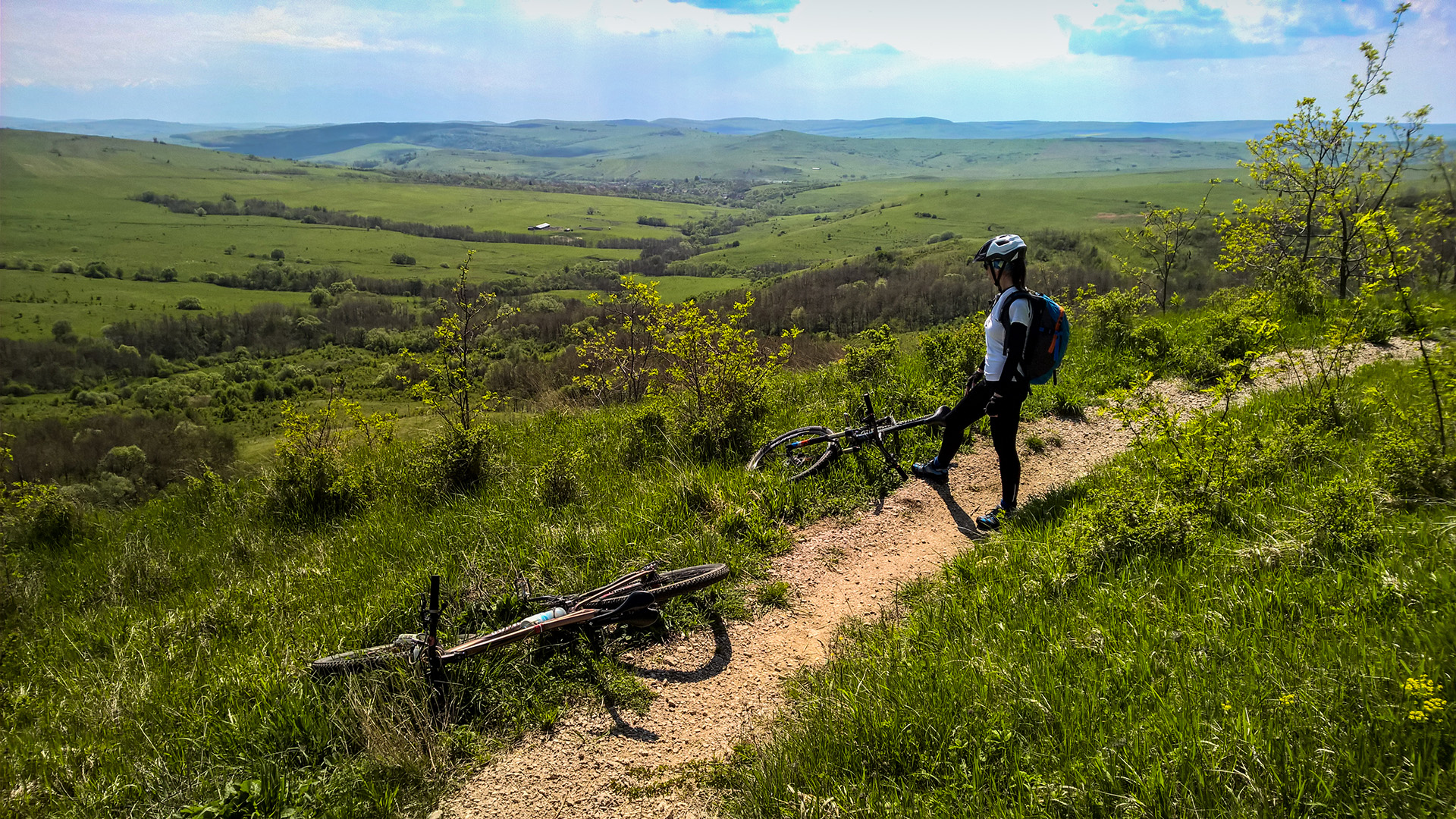
For a hassle-free experience, you can stay at Bike Check Inn. The owner, Cornel, is a wonderful and passionate guy who will help you with everything. He even has a bunch of bikes, ranging from basic hardtail mountain bikes to the latest full suspension eBikes.
Of course, these are not the only places around Brașov where you can try cycling. The variety of things to do in Brașov give you the opportunity to mix different activities and plan yourself a wonderful holiday in Transylvania.
24. Try paragliding near Brașov
If you’re looking for the real thrill, the mountains around Brașov offer many opportunities for a paragliding tandem flight. Some of us are paragliding pilots and we can recommend the best pilots for you. The usual places for paragliding are Bunloc, in Săcele, South of Brașov and Postăvaru Mts mentioned above, but also in Șaua Măgurii or Sinaia.

The access to Bunloc is faster and therefore also it cost less. We recommend taking a taxi or uber to Bunloc ski-lift, where is the normal meeting point with your pilot.
You should know that two types of flights are possible:
- an initiation flight, that normally takes about 15 minutes in the air. However, when you calculate your time, take into account one hour from your arrival to Bunloc until landing, near the ski lift. Why? Well, it takes few minutes for the ski lift to start (it only goes up with a minimum of 6 persons); add 15 minutes to go up by cable car, add 10-15 minutes to prepare at the take-off. Plus a few minutes waiting for the good moment to take off, considering wind direction and speed. And the flight itself.
- a long flight, where the pilot will try to keep you in the air as long as possible. The long flight can be a local flight with landing at the “official” landing place (long time) or long-distance flight, called cross-country or, for short XC flight. Many pilots, as included, are keen to go for the distance, for themselves, but it is also possible to book a XC tandem flight!
Local tip: if you are going to try paragliding in Brasov, please do your arrangements before your arrival, for two reasons: 1) while other things depend mostly on yourself, paragliding is subject to weather conditions. You should aim to be flexible with other things to do in Brasov, but be prepared to fly when the weather allows. 2) For a long-distance flight is much more difficult to find a pilot (compared to an initiation flight), so please give them time to make the necessary arrangements – the pilot might not be able to do another flight that day.
Local tip 2: we recommend an XC flight if you flew before and know you react in a turbulent condition. It can be quite bumpy up there in the air on a day with a lot of atmospheric instability
Local tip 3: because we like you, our reader, we give you another hint. If you go for XC, dress adequately (warm clothes). On a good day you can reach to the cloud-base and, man is moist and cold up there. We learned it the hard, ehhr cold way. 🙂
If you’re considering paragliding and you need more help, feel free to get in touch, we’d happily help you.
Visit the fortified churches around Brașov
Transylvania is famous for its over 160 fortified churches, dating back from centuries ago. These were built by the Germans – the so-called Transylvanian Saxons – during the Middle Age and have suffered numerous damages but also reconstructions during the following centuries.
In the past, these churches were considered to be the heart of the community and remained until today, the symbols of each settlement.
The fortified churches appeared in the 13th century, as a result of the heavy attacks coming from all sides. The reinforcements were added after each attack and therefore, many of these sacred buildings changed their destination from a church into a shelter for the locals.
25. Such is the case with the Prejmer Fortified Church, which looks more like a fortress, rather than a church. This heavily fortified construction dates back to the 13th century, more exactly in 1218, when the Teutonic Knights began its construction. Because it didn’t have the advantage of higher ground, it needed to be well defended, so 14 meters high walls were built around the church. There were also five defensive towers, a watch road and a moat. One very valuable characteristic is the 4 storey storage rooms, one for each family in the village, which provided shelter during sieges. Basically, the whole structure was made to withstand a few weeks of siege from the invading armies.

The sheer dimensions of this well-preserved construction and the historical importance made Prejmer citadel a UNESCO World Heritage site worth visiting. From Brașov, you can get here by public transport, taking bus 520 or using a private transport company. Or you can simply hire a car or book a guided tour here.
26. One of Transylvania’s most enchanting villages, Viscri has conserved numerous examples of Saxon-type architecture, characterized by the alignment of their pastel-hued façades with the street, their frontons, and their large, arched gateways. The old-fashioned atmosphere and wild landscapes of Viscri have delighted Prince Charles, the heir to the throne of England, who has bought a number of properties in the area and founded the Mihai Eminescu Trust, a foundation that has restored numerous historic buildings. This has led to an upsurge in rural tourism, and there are now a host of pensions fitted out in the traditional style, where you can sample dishes made according to ancestral recipes and discover the secrets of traditional crafts,
Today, the village attracts thirty thousand tourists annually.

The fortified church of Viscri, with its two rings of defensive walls and five towers, is a UNESCO World Heritage Site.
27. The fortified church at Cincu village, founded by Saxon colonists in the thirteenth century on a plateau between the rivers Olt and Hârtibaciu, is dominated by a monumental fortified church set at the top of a small hill. In the Adoration of the Shepherds depicted on the altar, the painter immortalized the traditional costume of local shepherds. In front of the altar, there is a fourteen meter deep well, dug so that the villagers would have a secure source of water in case of siege. The complex also includes a small chamber named the Matrimonial Dungeon, where husbands and wives who failed to get along were brought; forced to share a single glass, a single spoon, a single fork and a single bed, they were held here until they were reconciled. In the last 150 years, there has not been a single divorce in Cincu!
28. The fortified church of Hărman – The peasant fortress of Hărman (German: Honigberg, Latin: Mons Mellis, i.e. Honey Mountain) has at its center a Romanesque basilica recorded in documents dating back to 1240.

It is protected by twelve-meter-high fortified walls with seven towers and a zwinger. In the east tower, a pre-Reformation chapel has been preserved, inside which you can see murals depicting the Last Judgement.
Although it was attacked many times, the fortress was never conquered.
Visit the castles and citadels around Brașov
Yes, we know you’re thinking of the famous Dracula’s Castle, or Bran castle…
29. Built between 1377 and 1382 by the burghers of Braşov, Bran Castle was the main bastion against invasion by the Ottoman Empire. Later, Iancu of Hunedoara (1441-56) repaired and strengthened Bran, before entrusting the defense of southern Transylvania to Vlad the Impaler, who had recently lost the throne of Wallachia. It may well be that the Impaler visited Bran which was an important border post, although there is no written record of him doing so. On 1 December 1920, the townsfolk of Brasov donated the castle to Queen Maria, in token of their gratitude for the part she played in the unification of Romania on 1 December 1918. Between 1920 and 1927, Karel Liman, architect to the Royal Court, softened the castle’s military look, subjecting the interiors to astonishing metamorphoses.

Linger in the tea house on the shore of the lake it is an old wooden barn that Queen Maria had converted into a pavilion where she took her five o’clock tea.
30. Peleș castle, located in the charming city of Sinaia, is our recommendation if you are interested in royalty, princesses, and magnificent architecture.
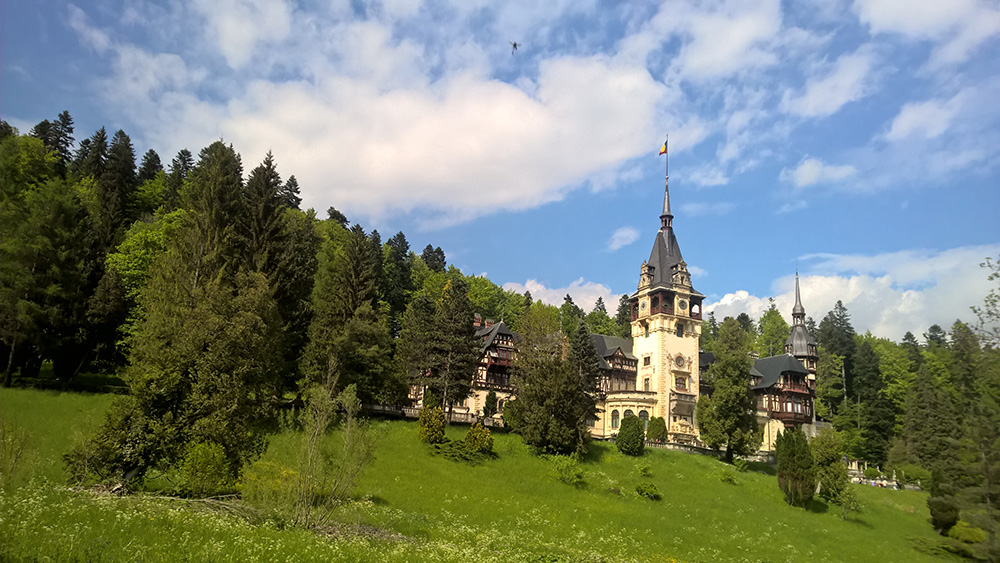
Built in a German new-Renaissance style, is considered one of the most impressive castles in Europe. Finished in 1883, Peleș Castle served as a summer residence for the Romanian royal family until 1947. It has a staggering 160 rooms, each richly decorated with the finest woodwork, Murano crystal chandeliers and impressive examples of European art.
This castle was the first castle in Europe to have electricity and even its own power plant and central heating.
In 1953, Peleș Castle became a National Museum but due to degradation, in 1975 it is closed until 1990, when it’s open again, for tourists.
Locals’ tip: If you choose to go to Peleș from Brașov, choose the train. Most of the time, there are traffic jams on DN1, on the way to Sinaia and back. Going by train is much cheaper and you don’t waste time looking for parking around Sinaia.
Locals’ tip: Make sure you buy the tickets for the extended tour if you choose to go here on your own. This tour gives you access to the second floor, where you can see beautifully decorated rooms and much more.
Visit some kid-friendly attractions in Brașov
31. The ZOO is located in the middle of nature, in Noua neighborhood. It has more than three hundred animals of seventy species, and is one of the county’s most popular destinations for children.
32. Aventura Park: sixteen trails of progressive difficulty, covering an area of three hectares, plus three zip lines over the central lake. The perfect place, weather you are looking for adrenaline or just relaxation.
33. Planetarium: part of the ZOO. Recently opened, the Planetarium in Brașov is the biggest in Romania and has multiple facilities at the highest standards, which allow children to enjoy a memorable virtual experience journey through the cosmos.
34. Rasnov Dino Park: located near Râșnov Castle, Dino Park features one hundred life-size dinosaurs, a 9D cinema, a 360 degree cinema, an adventure trail, a laser labyrinth and numerous interactive areas. For the first time ever, the world’s largest flying creature is reproduced here: Hatzegopteryx Thambema, discovered in the Hațeg land, in Romania. Also, visitors can see here the world’s largest dinosaur, Seismosaurus which was forty-five meters long.
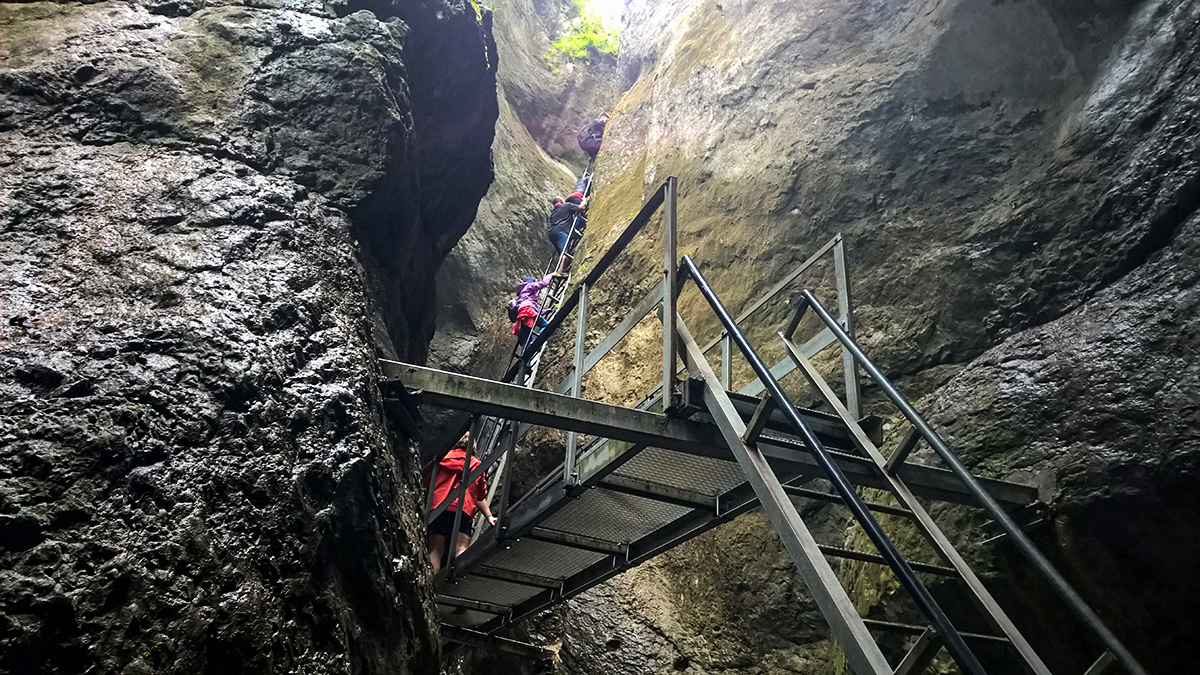
35. The Seven Ladders Canyon zip line and the Râşnoavei Gorges: At the Seven Ladders: you can attempt Romania’s longest zip line installation, which stretches for 3.8 kilometers. There are thirty-seven trails here (twenty-three for adults and fourteen for children), the longest being 273 meters in length, the shortest forty-seven meters. This could also be a perfect place for adults to have fun in the middle of nature.
Well, this kindof covers most of the things to do around Brașov, but there are more. If you visited Brasov and have any comments, or if you are about to visit, you can let us know what you think!
Best time to visit Brasov
Oh, we almost forgot! In case you’re wondering when it’s the best time to visit Brasov, it really depends on what you’re looking for.
If you like skiing an winter sports in general, you might want to visit Brasov during winter. In the last years, the cold season got warmer and warmer and we believe that in about 10 years, there won’t be snow anymore. So you still have some chances. Try to find accommodation from January to February (sometimes March). This way you’ll avoid the heavy crowds that usually come here during winter holidays.
if you’re looking for hiking and cycling and good weather, April – May and end of August – September is the best time to visit Brasov, as there is less rainfall and temperatures are acceptable. Of course, pack some extra layers because the mornings and evenings can be chilly.
The rest of the year is pretty ok as well, if you ask us. June has the most rainy days of the year but everything depends on the weather, as you can probably imagine.
One important thing you must not forget: Brasov is famous for having four seasons in one day. So come prepared for snow, hot afternoons and rain as well 🙂

[…] you venture further south, Braşov is worth a visit on its own: must-dos are a walk over the medieval city walls, a climb to the citadel, and a visit to the Black […]